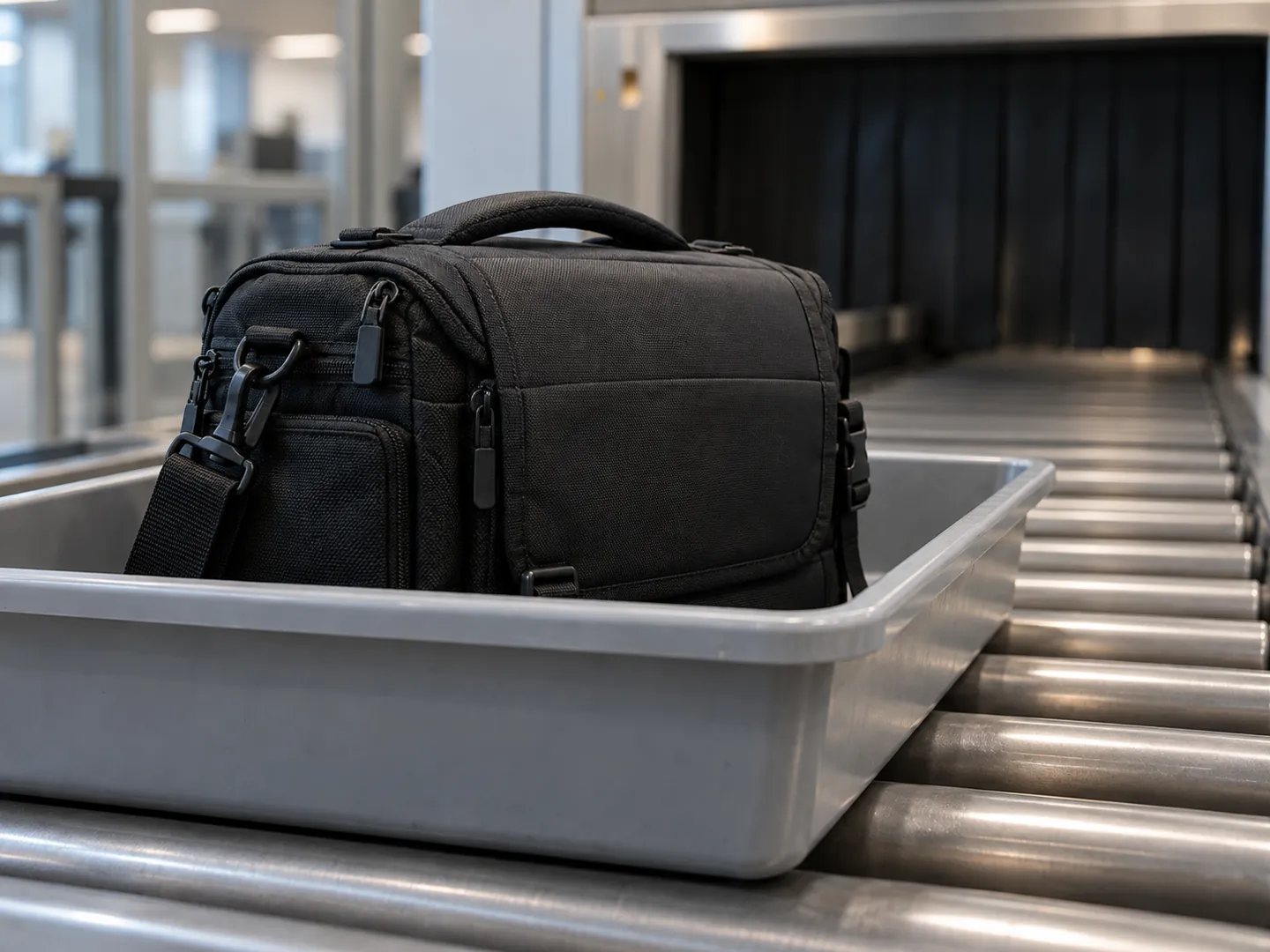
The camera can usually go anywhere. The spares cannot.
GOV.UK says camera equipment can usually go in hand and hold luggage. Spare lithium batteries and power banks are different: UK Civil Aviation Authority rules keep them in the cabin, protected, and within watt-hour limits.
GOV.UK says you can usually take camera equipment in hand and hold luggage. Charge it first: a device that will not switch on when asked will not be allowed on.
Pick what you are packing to see where the UK CAA guidance puts it. The bar shows how tightly it is restricted.
Based on UK Civil Aviation Authority passenger guidance. Airlines and airports can set stricter rules, so check with yours before you fly.
TWO NUMBERS WORTH KNOWING
Watt-hours decide where it flies.
One limit for approval, one hard ceiling for passengers.
≤ 100 Wh
Lithium-ion battery rating
Spare lithium-ion batteries and power banks up to 100 Wh are allowed in the cabin without the airline's approval. The CAA says batteries under 100 Wh are common in phones, laptops and cameras.
NO APPROVAL NEEDED · UK CAA
160 Wh
Largest battery in passenger bags
Between 100 and 160 Wh you need airline approval. Over 160 Wh is prohibited in passenger baggage. The US FAA uses the same 100 and 160 Wh lines.
THE CEILING · UK CAA
No Wh figure on the battery? The CAA's formula is volts × amp-hours = watt-hours. For milliamp-hours, multiply volts by mAh and divide by 1,000.
FOUR PACKING STEPS
Pack the bag the night before.
None of this needs special kit. It is about knowing which bag each battery goes in and making sure it cannot short or switch on.
Read the label
Find the Wh rating on each battery. If only volts and mAh are shown, work it out: volts × mAh ÷ 1,000.
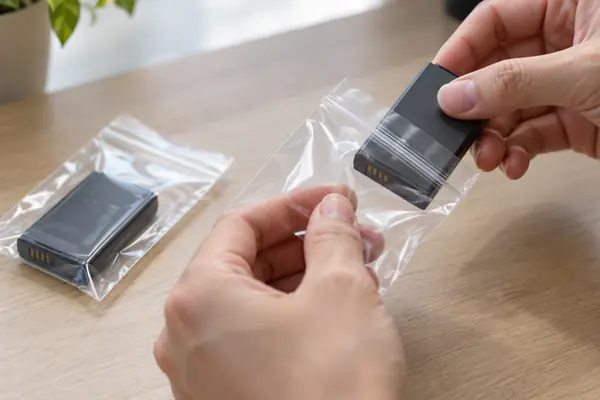
Pouch every spare
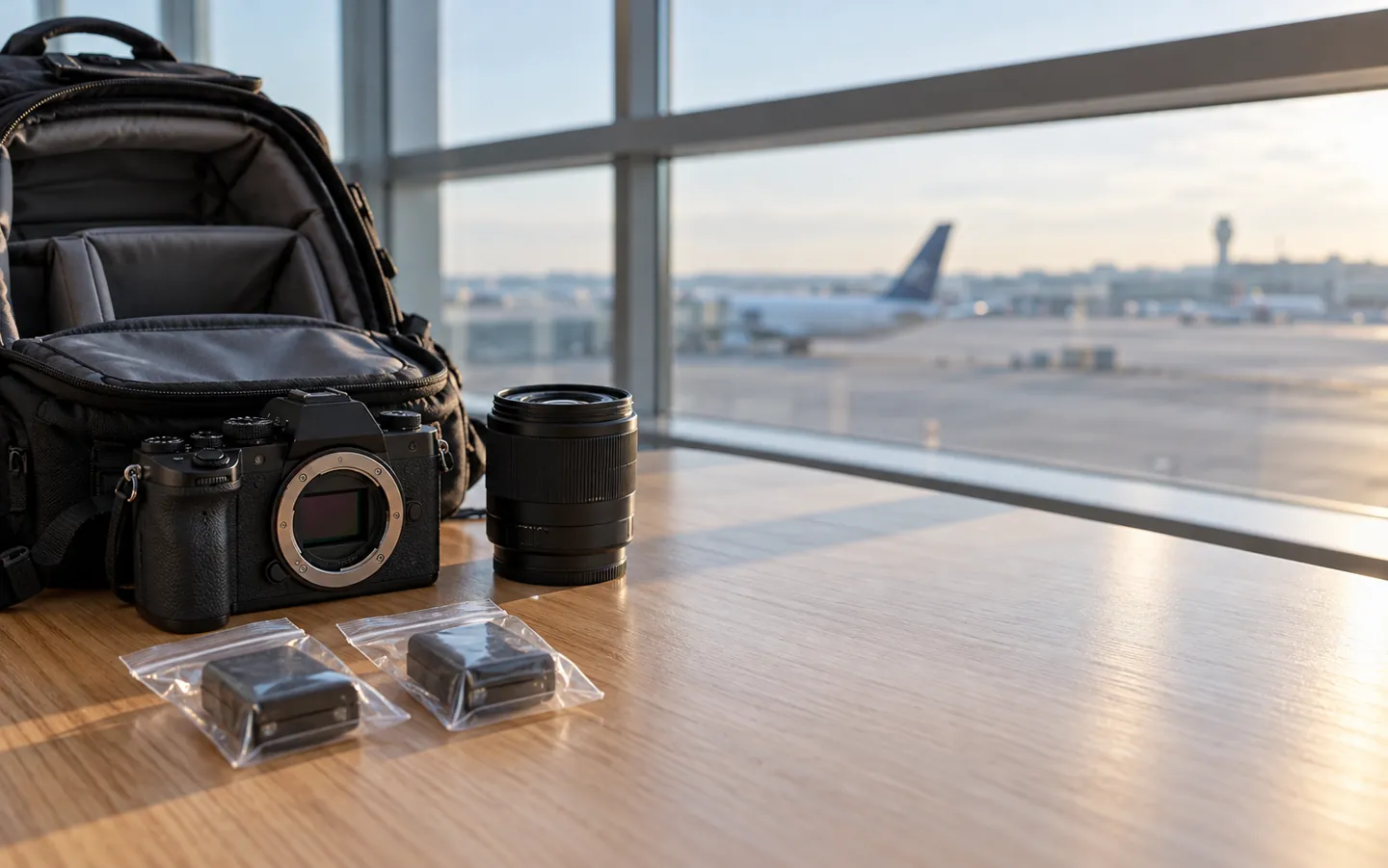
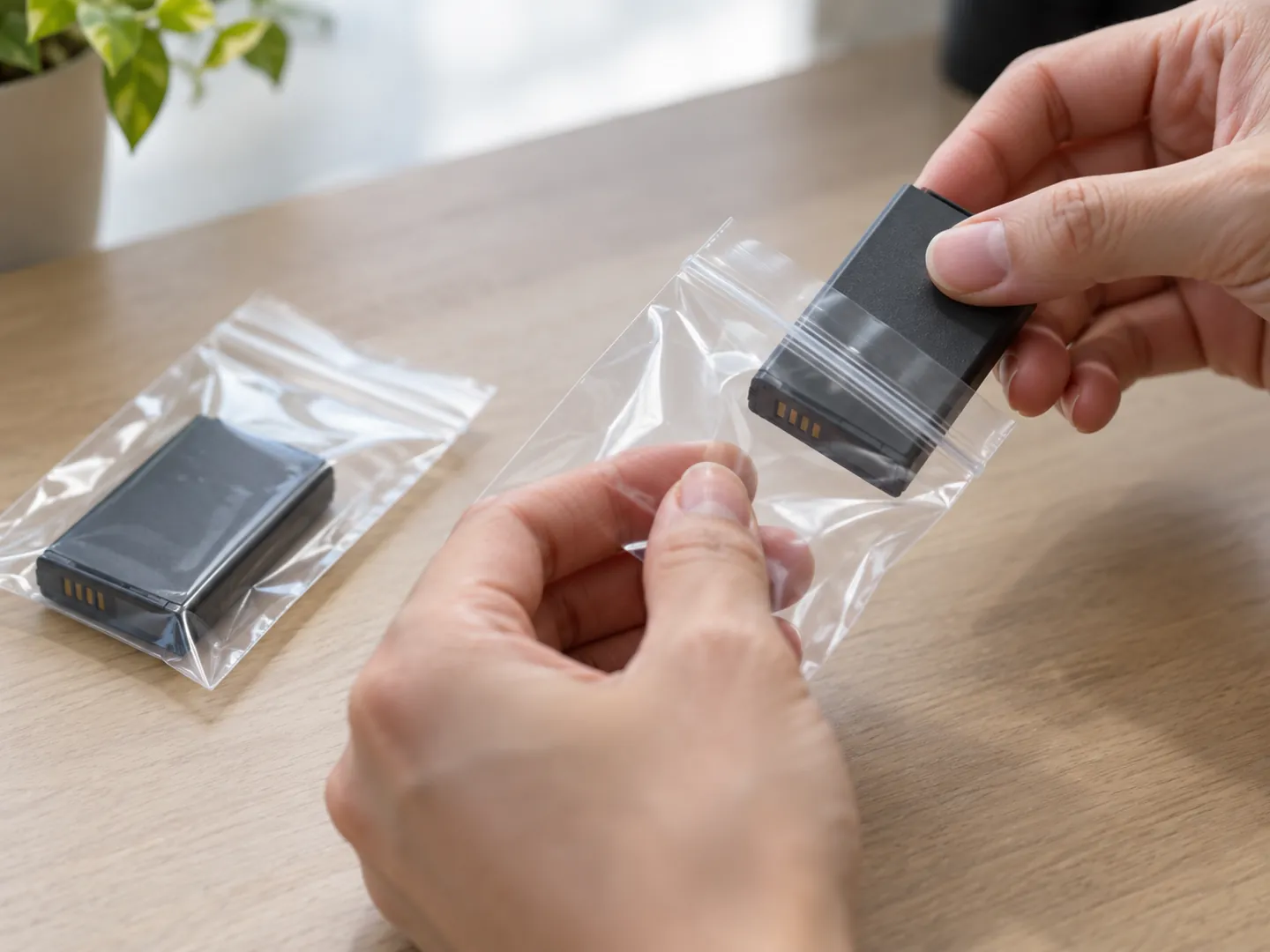
Keep spares in original packaging, tape over the terminals or give each one its own plastic bag or pouch.
Keep spares on you
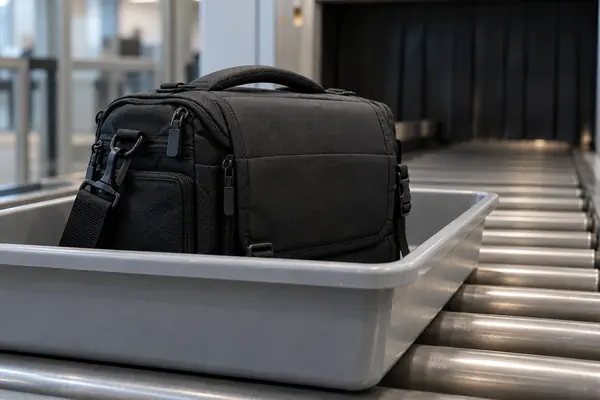
If your cabin bag is taken to the hold at the gate, the CAA says to remove the batteries and powered devices first.
Charge the camera
GOV.UK says if a device does not switch on when requested, you will not be allowed to take it onto the aircraft.
AI-generated image, not a photograph of a real person or place.AI-generated image, not a photograph of a real person or place.
WHY THE CABIN
Heat you can see and reach.
Lithium batteries can overheat in a self-sustaining reaction the FAA calls thermal runaway. The CAA says power banks and vapes in checked luggage can overheat and cause a fire.
In the cabin, crew can spot smoke and respond. The FAA says if a device overheats, smokes or catches fire on your flight, alert the crew immediately. The CAA adds that damaged, overheating or swollen batteries should never be carried on an aircraft.
Questions
Questions people ask
Can I put my camera in checked luggage?
GOV.UK says you can usually take camera equipment in hand and hold luggage. The CAA recommends carrying battery-powered devices in the cabin; if one goes in the hold it must be completely switched off, not in sleep mode, and protected from damage.
How many spare camera batteries can I take?
For spares up to 100 Wh the CAA rules set no approval requirement, but they must be in carry-on baggage and protected from short circuit. For spares between 100 and 160 Wh you need airline approval and can carry no more than two per person.
How do I work out a battery's Wh rating?
Multiply the voltage by the amp-hours. If the battery shows milliamp-hours, multiply volts by mAh and divide by 1,000. The CAA says manufacturers have been required to mark lithium-ion batteries with their Wh rating since 2009 and 2011.
Can I charge my camera from a power bank on the plane?
Under rules in force from 27 March 2026, power banks must not be recharged on board and should not be used to charge other devices during the flight. You may carry no more than two per person, in the cabin.
What if my battery looks swollen?
Do not fly with it. The CAA says batteries showing signs of damage, overheating or swelling should not be used and should never be carried on an aircraft.